NCCC Oklahoma (Tulsa) Chapter


Tracy’s Story
I am an HPV nerd. Years ago, I worked in reproductive and sexual health clinics conducting clinical trials. Our research group worked with various pharmaceutical companies and sponsors to develop the Cervarix vaccine and develop today’s Pap smear testing products and STI testing protocols.
I still remember women’s confusion when they were told they had HPV: a virus that none of them had heard of. We explained HPV is so common almost everyone that is sexually active will become infected with unless they are vaccinated. Yet, at the time, even health care providers were just learning about HPV’s dangers. I heard personal stories from women and even adolescents who had health complications because of HPV, but HPV rarely gave them any signs or warnings. HPV can lay silent—but we must not be silent in order to fight cervical cancer!
Today we know human papillomavirus impacts both females and males. Despite the newest generation Gardasil-9 vaccine that prevents certain cancers, advocating for comprehensive sexual health education is challenging…especially in the Bible belt. Oklahoma is in a crisis. Our HPV vaccine uptake is among the lowest in the nation. This means disproportionate rates of HPV-associated health issues will still impact our mothers, daughters, and sisters.
Confusion over this sexually transmitted infection still exists, and I’m committed to clear the misunderstandings through my research, presentations, and partnerships across Oklahoma to raise HPV awareness. Let’s spread the facts to increase the vax!
Ciara’s Story
Ciara Jolley is a Master of Public Health candidate passionate about improving cervical cancer prevention and outcomes across Oklahoma, with a particular focus on rural communities. As a co-leader of the NCCC’s Tulsa chapter, she is committed to increasing awareness of HPV prevention and cervical cancer screening while addressing barriers that can make preventive care difficult to access. Through education, advocacy, and collaboration, she hopes to empower individuals to take an active role in their sexual and reproductive health and help reduce disparities in cervical cancer rates throughout Oklahoma.

HPV Risk Perceptions and Knowledge Among Oklahoma Undergraduates: Implications for Vaccination Efforts
Chapter leader Tracy Freudenthaler co-authored this study on Oklahoma undergraduates’ perceptions of HPV risk, risk factors, and HPV knowledge. Surveys were administered to students aged 18-24 at two universities. Regardless of vaccination status, respondents generally perceived their risk as low, yet most did not identify the HPV vaccine as a protective factor. Young adults who are not sexually active may hold a false sense of safety from HPV.
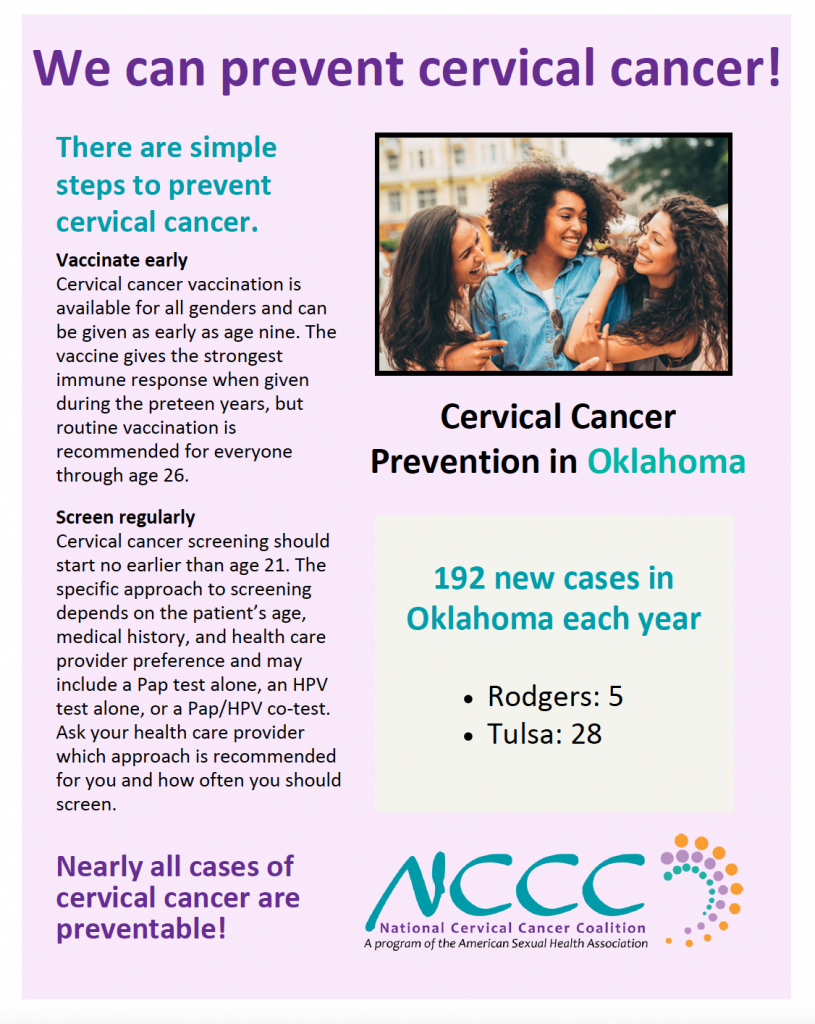
Cervical Cancer Prevention in Oklahoma
This downloadable fact sheet outlines the key steps to prevent cervical cancer—vaccinate early and screen regularly. Customized for the Tulsa chapter, it also highlights statistics that show the burden of cervical cancer in Oklahoma.